San Antonio Business Tax Accountant AlternativeHotel tax beside the income tax
A full week of rooms is not the company income tax, and the two papers should never be asked to do each other's job.
Ask about the stackThree papers, one busy week
Picture a hotel or a short-term rental that fills when the city fills. The card batches look like a victory. The victory has to be split before anyone talks about profit. Guests paid for a room, and part of that payment is tax that was never yours. Guests paid for breakfast, and part of that may be sales tax. What remains, after the month is closed, is what the company return is allowed to consider.
Owners mix those papers because the bank does not label them. A deposit is a deposit. The work is to pull the taxes back out and park them with the month they were earned, not with the month the return is filed.
The room tax stack
A full week of rooms in this city can carry hotel tax as high as 16.75 percent. Six points of that go to the state. Nine points go to the city, and the city itself splits those nine into seven general and two tied to the convention center expansion. The remaining 1.75 points are Bexar County's, collected by the city. The city's tax rate summary is where those pieces are published. The stack is a description, never the bill for one inn.
A short-term rental can land in the same stack. Either way the books ask one question. Was the tax already pulled from the payout, or is it still inside the deposit? The payout report is read before the remainder is called revenue.
Room tax has a due date of its own and a form of its own. Letting it go late because the income tax felt louder is how a good season becomes a letter. That due date is written on the close calendar, beside the month it belongs to.
Sales tax riding in the same deposit
Texas begins a taxable sale at 6.25 percent for the state. Inside the city three local pieces sit on top of that, and together with the state they stop at the 8.25 percent cap. On a taxable sale inside the city, the municipal slice is 1.125 percent and it is filed under local code 2015012. Transit code 3015995 is the half-percent piece. District code 3015664 is the Advanced Transportation District at 0.375 percent.
Bexar County leaves sales tax to other governments. Transit and the transportation district take the local share the county does not levy. Of the city's 1.125 percent, one full point is general and the leftover 0.125 point funds Pre-K. Outside the city limits the local piece can change, so the address is read before any row is written.
January 2026 is when the transportation district piece left 0.25 percent and became 0.375 percent. A deposit from that January cannot be filed out of a memory of the spring before. The return for a month's sales tax goes in on the 20th of the following month. The Comptroller's sales-tax pages, not a drawer note, are where the rates and the codes are read.
The company return waits its turn
Franchise reports for 2026 and 2027 still show a no-tax-due threshold of 2,650,000 dollars. Above it, retail and wholesale sit at 0.375 percent, and businesses that are neither sit at 0.75 percent. 15 May is the day most of those reports go in. Read the rate for the year being filed on the Comptroller franchise page. The same page caps the compensation deduction at 480,000 dollars, and the EZ computation uses a 20 million dollar revenue line with a rate of 0.331 percent.
Swapping the property list and the profit return is a common miss in a crowded April, because one names what the business owns and the other names what it earned. Tax Code section 22.23 is the citation on the Comptroller's deadline calendar. April 15 is the day a property list leaves when the owner never asked for more time. May 15 is the later day, and it applies only after that written request exists.
Downtown, midtown, and the inner neighborhoods sit in San Antonio ISD. The school workbook puts that district on about 37.7 percent of the city's census blocks, which is a map share and not the bill on the corner shop. On each 100 dollars of taxable value the workbook's combined rate is 1.1552, of which 0.7552 is maintenance and operations and 0.4 is interest and sinking. City property tax is a separate bill, shown on the city rate summary as 56.288 cents per 100 dollars for the fiscal year labeled 2027, divided between operations and debt.
Bump into these rates on a public page and you are still not looking at a quote for your file. They sit next to the close so a date is claimed before it can surprise anyone. After the months are finished, the company return and the franchise report are prepared from the same numbers, one profit, told twice only if someone splits them.
How a good month names the dates
Before the letters arrive, a finished month already knows four days. The 20th for sales tax. The room-tax due date. Rendition in April. The franchise report in May. Federal estimates sit beside that list. The company return is built only after those days have already been kept.
An older unmatched month is finished before anyone names a profit. Naming profit first is how the return outruns the books.
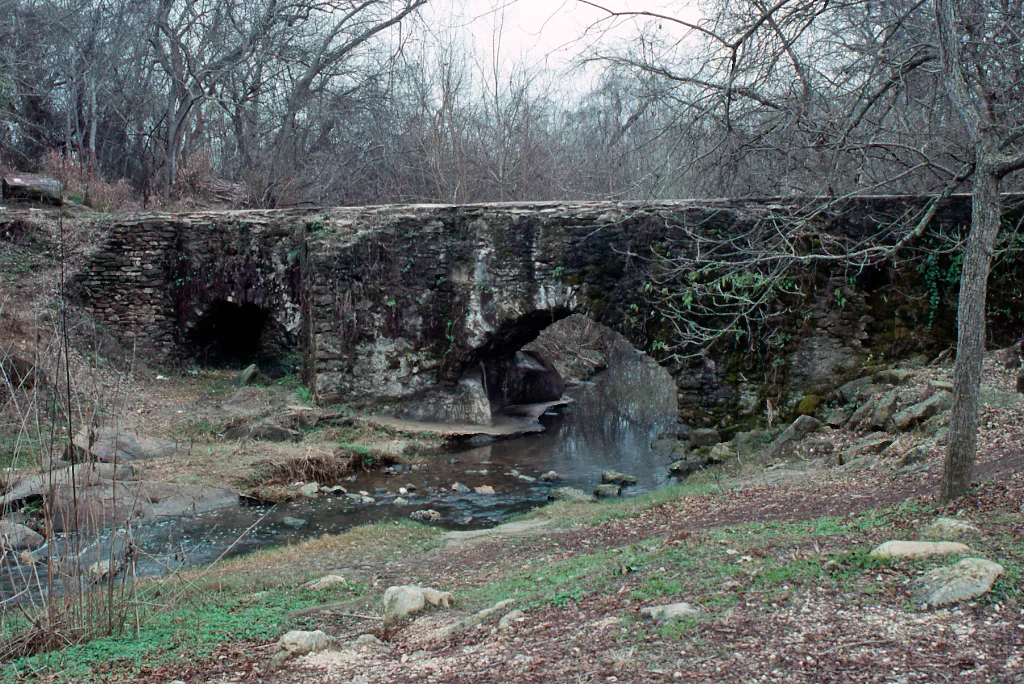
The Espada Aqueduct still carries water through stone arches south of downtown, a piece of work so old every Texan can respect the patience in it. We feel that patience as Texans do. A room-tax filing asks for the same patience. The water and the tax each stay in their own channel, and the company return waits until both have been named.
Keep reading
Name the paper that is mixed up
Room tax, sales tax, or the company return. A phrase is enough.

You will be talking to the Steven Palmieri practice.